
Understanding the Difference Between Solid Wood and Wood Veneer
When selecting fine furniture, cabinetry, or architectural wood finishes, understanding the distinction between solid wood and wood veneer is essential. While both can offer exceptional beauty and craftsmanship, each material possesses unique characteristics that influence durability, restoration potential, longevity, and overall value.
HELPFUL TIPS
Dave Kyle
5/12/20262 min read
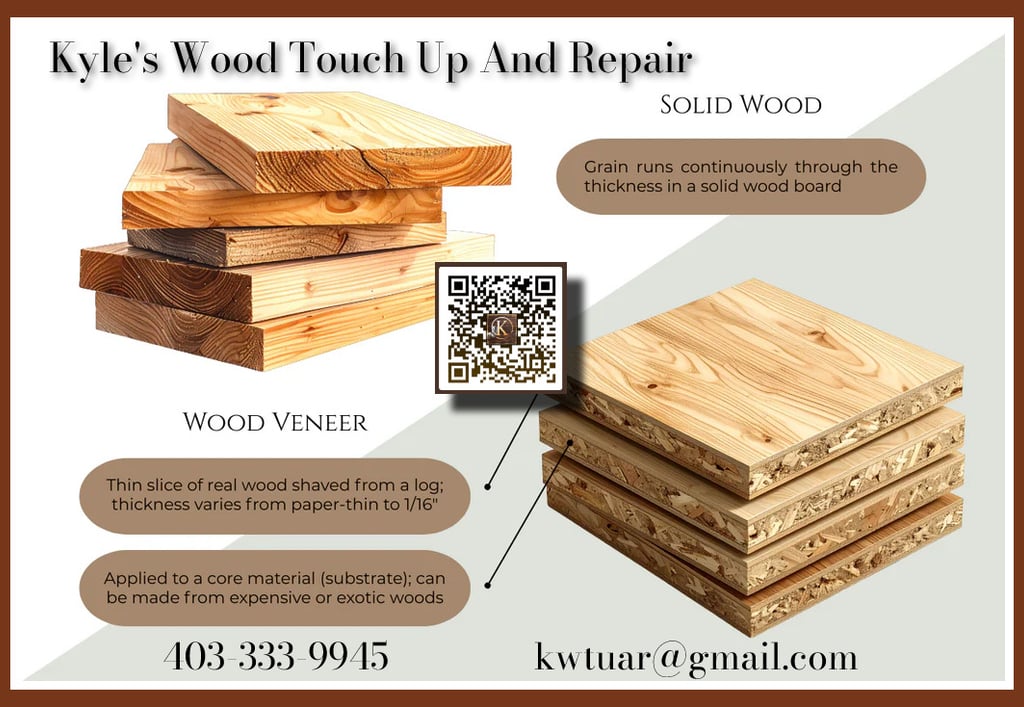
Solid Wood
Solid wood is crafted entirely from natural timber, showcasing authentic grain variation, depth, and character throughout the piece. Revered for its strength, longevity, and timeless appeal, solid wood is often associated with heirloom-quality furniture and luxury craftsmanship.
Characteristics
Constructed entirely from natural hardwood or softwood
Consistent grain and coloration throughout the material
Substantial weight and authentic texture
Naturally unique — no two pieces are identical
Advantages
Exceptional durability and structural integrity
Can be professionally sanded, repaired, and refinished multiple times
Ages beautifully over time, developing rich character and patina
Considered highly valuable in fine furniture and custom millwork
More resistant to minor surface damage and wear
Considerations
Higher material and craftsmanship costs
Can naturally expand and contract with humidity changes
Heavier than veneered construction
Requires proper environmental care to preserve stability
Wood Veneer
Wood veneer consists of a thin layer of genuine hardwood expertly bonded over a stable engineered core such as MDF or plywood. Modern veneer craftsmanship allows manufacturers to achieve sophisticated, consistent designs while maximizing material efficiency and structural stability.
Characteristics
Thin layer of real wood applied over an engineered substrate
Smooth, uniform appearance with controlled grain consistency
Lightweight yet structurally stable construction
Commonly used in contemporary and large-scale furniture manufacturing
Advantages
More resistant to warping, twisting, and splitting
Allows for intricate patterns and seamless contemporary designs
More cost-effective while still offering the appearance of real wood
Considered a more resource-efficient and sustainable option
Ideal for large panels and modern architectural applications
Considerations
Surface damage may chip, peel, or expose the substrate beneath
Limited refinishing capability compared to solid wood
Repairs can be more technically challenging
Vulnerable to moisture intrusion if the veneer becomes compromised
How to Identify Solid Wood vs. Veneer
Texture & Depth
Solid wood typically displays a richer, more dimensional texture with natural irregularities and depth. Veneer surfaces are often smoother and more uniform in appearance.
Grain Continuity
On solid wood furniture, the grain pattern naturally flows through corners and edges. Veneered pieces may display edge banding or abrupt grain transitions.
Repeating Patterns
Because veneer sheets are manufactured and matched during production, grain patterns may appear repeated or highly symmetrical across the surface.
Which Is the Better Choice?
Both solid wood and veneer can be exceptional choices depending on the intended application, design goals, and budget.
Solid Wood Is Ideal For:
Heirloom-quality furniture
Dining tables and high-use surfaces
Luxury cabinetry and custom millwork
Pieces intended for long-term restoration and refinishing
Veneer Is Ideal For:
Contemporary or complex furniture designs
Large architectural surfaces
Budget-conscious luxury aesthetics
Environments where dimensional stability is important
Ultimately, quality craftsmanship matters as much as the material itself. Professionally constructed solid wood and expertly crafted veneer furniture can both offer remarkable beauty, sophistication, and lasting performance when properly cared for.